Home >> Autocatalog >> Kia >> Morning >> Morning III >> 1.0 T-GDI (100 Hp) Automatic
Autocatalog Blog Login Register Car Specs API
English ▼

Specs of Kia Morning III 1.0 T-GDI (100 Hp) Automatic /2018, 2019, 2020/

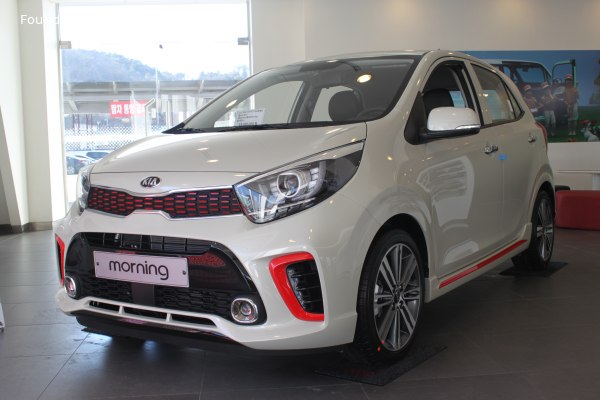
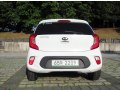
2017 Kia Morning III - Photo 1
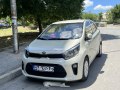
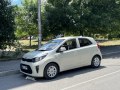
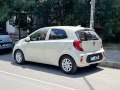
Kia Morning III - Photo 2Kia Morning III - Photo 3Kia Morning III - Photo 4Kia Morning III - Photo 5

Key specs:
Kia Morning III 1.0 T-GDI (100 Hp) Automatic
/Hatchback 2018 - 2020/

What is the body type of Kia Morning III?Hatchback, 5 Doors, 5 Seats
What is the fuel consumption and economy of Kia Morning III 1.0 T-GDI (100 Hp) Automatic?8.2 l/100 km
28.7 US mpg
34.4 UK mpg
12.2 km/l
How environmentally friendly is Kia Morning 1.0 T-GDI (100 Hp) Automatic?136 g/km CO2
What is the power output of Kia Morning Hatchback 2018 1.0 T-GDI (100 Hp) Automatic?100 Hp, 171 Nm
126.12 lb.-ft.
What is the engine displacement of Kia Morning Hatchback 2018 1.0 T-GDI (100 Hp) Automatic?1.0 l
998 cm3
60.9 cu. in.
What is the number of cylinders in 2018 Kia 1.0 T-GDI (100 Hp) Automatic?3, Inline
What is the drivetrain of Kia Morning III Hatchback 2018 1.0 T-GDI (100 Hp) Automatic?Front wheel drive. Internal Combustion engine. The Internal combustion engine (ICE) drives the front wheels of the vehicle.
What is the length of 2018 Kia Morning Hatchback?3595 mm
141.54 in.
What is the width of 2018 Kia Morning Hatchback?1595 mm
62.8 in.
What is the kerb weight of 2018 Kia Morning III 1.0 T-GDI (100 Hp) Automatic?965 kg
2127.46 lbs.
What is the number of gears in What is the gearbox type of 2018 Kia Morning III 1.0 T-GDI (100 Hp) Automatic?4, automatic transmission

Kia Morning III 1.0 T-GDI (100 Hp) Automatic - Full specifications

General information

BrandKia
Model Morning
Generation Morning III
Modification (Engine) 1.0 T-GDI (100 Hp) Automatic
Start of production 2018 year
End of production June, 2020 year
Powertrain Architecture Internal Combustion engine
Body typeHatchback
Seats 5
Doors 5

Performance specs

Fuel consumption (economy) - urban 9.1 l/100 km 25.8 US mpg
31 UK mpg
11 km/l
Fuel consumption (economy) - extra urban 7.1 l/100 km 33.1 US mpg
39.8 UK mpg
14.1 km/l
Fuel consumption (economy) - combined 8.2 l/100 km 28.7 US mpg
34.4 UK mpg
12.2 km/l
CO2 emissions136 g/km
Fuel Type Petrol (Gasoline)
Weight-to-power ratio 9.7 kg/Hp, 103.6 Hp/tonne
Weight-to-torque ratio 5.6 kg/Nm, 177.2 Nm/tonne

Engine specs

Power 100 Hp @ 4500 rpm.
Power per litre 100.2 Hp/l
Torque 171 Nm @ 1500-4000 rpm. 126.12 lb.-ft. @ 1500-4000 rpm.
Engine layout Front, Transverse
Engine Model/Code Kappa II / G3LC
Engine displacement 998 cm3 60.9 cu. in.
Number of cylinders 3
Engine configuration Inline
Cylinder Bore 71 mm 2.8 in.
Piston Stroke 84 mm 3.31 in.
Compression ratio 10:1
Number of valves per cylinder 4
Fuel injection system Direct injection
Engine aspiration Turbocharger, Intercooler
Engine oil capacity 3.6 l 3.8 US qt | 3.17 UK qt
Engine oil specification Log in to see.Log in to see.
Coolant 5.3 l 5.6 US qt | 4.66 UK qt
Engine systemsStart & Stop System

Space, Volume and weights

Kerb Weight 965 kg 2127.46 lbs.
Fuel tank capacity 35 l 9.25 US gal | 7.7 UK gal

Dimensions

Length 3595 mm 141.54 in.
Width 1595 mm 62.8 in.
Height 1485 mm 58.46 in.
Wheelbase 2400 mm 94.49 in.
Front track 1394 mm 54.88 in.
Rear (Back) track 1403 mm 55.24 in.
Front overhang 675 mm 26.57 in.
Rear overhang 520 mm 20.47 in.

Drivetrain, brakes and suspension specs

Drivetrain Architecture The Internal combustion engine (ICE) drives the front wheels of the vehicle.
Drive wheel Front wheel drive
Number of gears and type of gearbox 4 gears, automatic transmission
Front suspension Independent, McPherson type
Rear suspension Torsion bar
Front brakesVentilated discs
Rear brakesDisc
Assisting systemsABS (Anti-lock braking system)
Steering type Steering rack and pinion
Power steering Electric Steering
Tires size 195/45 R16
Wheel rims size16