Startseite >> Autokatalog >> Kia >> Morning >> Morning III >> 1.0 T-GDI (100 PS) Automatic
Autokatalog Blog Einloggen Registrierung Car Specs API
Deutsch ▼

Technische Daten Kia Morning III 1.0 T-GDI (100 PS) Automatic /2018, 2019, 2020/

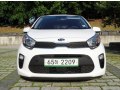
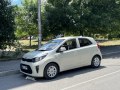
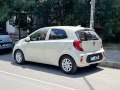
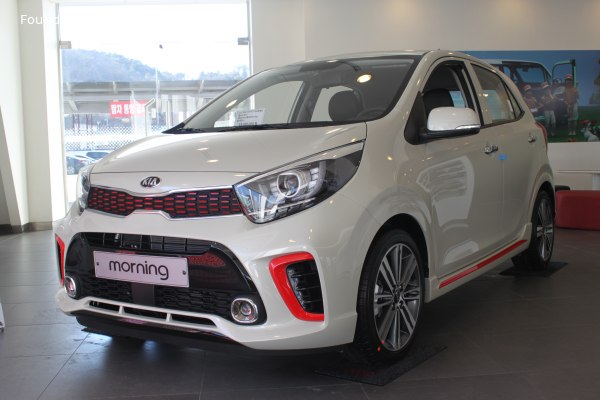
2017 Kia Morning III - Bild 1
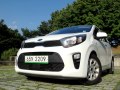
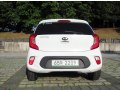
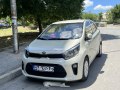
Kia Morning III - Bild 2Kia Morning III - Bild 3Kia Morning III - Bild 4Kia Morning III - Bild 5Kia Morning III - Bild 6Kia Morning III - Bild 7Kia Morning III - Bild 8

Hauptspezifikationen

Kia Morning III 1.0 T-GDI (100 PS) Automatic /Schrägheck 2018 - 2020/

Was ist der Karosserietyp von Kia Morning III?
Schrägheck, 5 Türen, 5 Sitze
Wie hoch ist der Kraftstoffverbrauch von Kia Morning III 1.0 T-GDI (100 Hp) Automatic?
8.2 l/100 km
28.7 US mpg
34.4 UK mpg
12.2 km/l
Wie umweltfreundlich ist Kia Morning 1.0 T-GDI (100 Hp) Automatic?
136 g/km CO2
Wie hoch ist die Motorleistung von Kia Morning Schrägheck 2018 1.0 T-GDI (100 Hp) Automatic?
100 PS, 171 Nm
126 lb.-ft.
Wie groß ist der Hubraum von Kia Morning Schrägheck 2018 1.0 T-GDI (100 Hp) Automatic?
1.0 l
998 cm3
60.9 cu. in.
Wie viele Zylinder hat der Motor von 2018 Kia 1.0 T-GDI (100 Hp) Automatic?
3, Reihenmotor
Was ist die Antriebsart von Kia Morning III Schrägheck 2018 1.0 T-GDI (100 Hp) Automatic?
Vorderradantrieb. Verbrennungskraftmaschine. Die VKM treibt die Vorderräder des Fahrzeugs an.
Wie lang ist 2018 Kia Morning Schrägheck?
3595 mm
141.54 in.
Wie breit ist 2018 Kia Morning Schrägheck?
1595 mm
62.8 in.
Wie hoch ist das Leergewicht von 2018 Kia Morning III 1.0 T-GDI (100 Hp) Automatic?
965 kg
2127 lbs.
Wie viele Gänge und welchen Getriebetyp hat 2018 Kia Morning III 1.0 T-GDI (100 Hp) Automatic?
4, Automatikgetriebe
Allgemeine Informationen

Marke
Modell
Generation
Modifikation (Motor)
1.0 T-GDI (100 PS) Automatic
Produktionsbeginn
2018
Produktionsende
Juni, 2020
Antriebsstrangarchitektur
Verbrennungskraftmaschine
Karosserie
Schrägheck
Sitze
5
Türen
5
Interessiert an Kia Morning als Gebrauchtwagen?
Fahrzeughistorie prüfen →

Leistung

Verbrauch - Innerorts
9.1 l/100 km 25.8 US mpg
31 UK mpg
11 km/l
Verbrauch - Außerorts
7.1 l/100 km 33.1 US mpg
39.8 UK mpg
14.1 km/l
Verbrauch - Kombiniert
8.2 l/100 km 28.7 US mpg
34.4 UK mpg
12.2 km/l
CO2-Emissionen
136 g/km
Kraftstoffart
Benzin
Masse-Leistungs-Verhältnis (Leistungsgewicht)
9.7 kg/PS, 103.6 PS/t
Masse-Drehmoment-Verhältnis
5.6 kg/Nm, 177.2 Nm/t

Motor

Max. Motorleistung
100 PS @ 4500 U/min
Leistung pro Liter Hubvolumen
100.2 PS/l
Max. Drehmoment
171 Nm @ 1500-4000 U/min 126 lb.-ft. @ 1500-4000 U/min
Motorlayout
Front, quer
Motormodell/Motorcode
Kappa II / G3LC
Hubraum
998 cm3 60.9 cu. in.
Anzahl der Zylinder
3
Motorkonfiguration
Reihenmotor
Bohrung
71 mm 2.8 in.
Hub
84 mm 3.31 in.
Verdichtungsverhältnis
10:1
Anzahl der Ventile pro Zylinder
4
Kraftstoffeinspritzsystem
Direkteinspritzung
Motoraufladung
Turbolader, Ladeluftkühler
Motorölfüllmenge
3.6 l 3.8 US qt | 3.17 UK qt
Motorölspezifikation
Kühlmittel
5.3 l 5.6 US qt | 4.66 UK qt
Motorsysteme
Start/Stopp-System

Volumen und Gewichte

Leergewicht
965 kg 2127 lbs.
Tankinhalt
35 l 9.25 US gal | 7.7 UK gal

Maße

Länge
3595 mm 141.54 in.
Breite
1595 mm 62.8 in.
Höhe
1485 mm 58.46 in.
Radstand
2400 mm 94.49 in.
Spur vorne
1394 mm 54.88 in.
Spur hinten
1403 mm 55.24 in.
Frontüberhang
675 mm 26.57 in.
Hecküberhang
520 mm 20.47 in.

Antrieb, Bremsen und Federung

Antriebskonzept
Die VKM treibt die Vorderräder des Fahrzeugs an.
Antriebsart
Vorderradantrieb
Anzahl der Gänge und Art des Getriebes
4 Gänge, Automatikgetriebe
Vorderradaufhängung
Unabhängig, McPherson-Typ
Hinterradaufhängung
Torsionsstab
Bremsen vorne
Belüftete Scheibenbremse
Bremsen hinten
Scheibenbremse
Assistenzsysteme
ABS (Antiblockiersystem)
Lenkungstyp
Zahnstangenlenkung
Servolenkung
Elektrische Servolenkung
Reifengröße
Felgengröße
16