Home >> Car catalog >> Volkswagen >> Caravelle >> Caravelle (T3) >> 2.1 (95 Hp) Syncro 14
All brands Blog Login Register Car Specs API
English ▼

Specs of Volkswagen Caravelle (T3) 2.1 (95 Hp) Syncro 14 /1987, 1988, 1989, 1990, 1991, 1992/

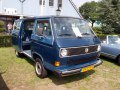
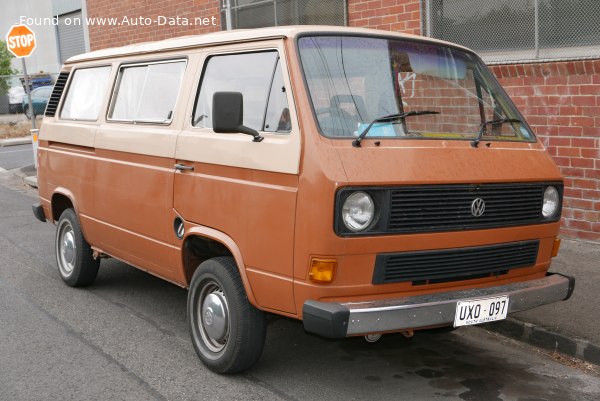
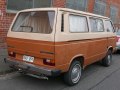
1982 Volkswagen Caravelle (T3) - Photo 1
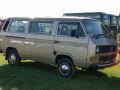
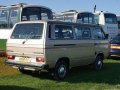
Volkswagen Caravelle (T3) - Photo 2Volkswagen Caravelle (T3) - Photo 3Volkswagen Caravelle (T3) - Photo 4Volkswagen Caravelle (T3) - Photo 5

Key specs

Volkswagen Caravelle (T3) 2.1 (95 Hp) Syncro 14 /Van 1987 - 1992/

What is the body type of Volkswagen Caravelle (T3)?
Van, 4-5 Doors, 7-9 Seats
How fast is 1987 Caravelle (T3) 2.1 (95 Hp) Syncro 14?
135 km/h | 84 mph
What is the power output of Volkswagen Caravelle Van 1987 2.1 (95 Hp) Syncro 14?
95 Hp, 160 Nm
118 lb.-ft.
What is the engine displacement of Volkswagen Caravelle Van 1987 2.1 (95 Hp) Syncro 14?
2.1 l
2109 cm3
128.7 cu. in.
What is the number of cylinders in 1987 Volkswagen 2.1 (95 Hp) Syncro 14?
4, Boxer
What is the drivetrain of Volkswagen Caravelle (T3) Van 1987 2.1 (95 Hp) Syncro 14?
All wheel drive (4x4). Internal Combustion engine. The Internal combustion engine (ICE) drives the rear wheels permanently, and the front wheels are driven through an electrically or mechanically operated clutch if necessary.
What is the length of 1987 Volkswagen Caravelle Van?
4600 mm
181.1 in.
What is the width of 1987 Volkswagen Caravelle Van?
1845 mm
72.64 in.
What is the kerb weight of 1987 Volkswagen Caravelle (T3) 2.1 (95 Hp) Syncro 14?
1625-1655 kg
3583 - 3649 lbs.
What is the maximum permissible mass of 1987 Volkswagen Caravelle (T3) 2.1 (95 Hp) Syncro 14?
2500 kg
5512 lbs.
What is the trunk (boot) capacity of 1987 Volkswagen Caravelle Van?
1700 - 2930 l
60 - 103.5 cu. ft.
What are the number of gears and the gearbox type of 1987 Volkswagen Caravelle (T3) 2.1 (95 Hp) Syncro 14?
5, manual transmission
General information

Model
Generation
Modification (Engine)
2.1 (95 Hp) Syncro 14
Start of production
1987
End of production
1992
Powertrain Architecture
Internal Combustion engine
Body type
Van
Seats
7-9
Doors
4-5
Looking for Volkswagen Caravelle on the used-car market?
Check its history →

Performance specs

Fuel consumption (economy) - urban
16.1 l/100 km 14.6 US mpg
17.5 UK mpg
6.2 km/l
Fuel consumption (economy) - extra urban
12.1 l/100 km 19.4 US mpg
23.3 UK mpg
8.3 km/l
Fuel Type
Petrol (Gasoline)
Maximum speed
135 km/h 84 mph
Weight-to-power ratio
17.1 kg/Hp, 58.5 Hp/tonne
Weight-to-torque ratio
10.2 kg/Nm, 98.5 Nm/tonne

Engine specs

Power
95 Hp @ 4800 rpm.
Power per litre
45 Hp/l
Torque
160 Nm @ 2800 rpm. 118 lb.-ft. @ 2800 rpm.
Engine layout
Rear, Longitudinal
Engine Model/Code
MV
Engine displacement
2109 cm3 128.7 cu. in.
Number of cylinders
4
Engine configuration
Boxer
Cylinder Bore
94 mm 3.7 in.
Piston Stroke
76 mm 2.99 in.
Compression ratio
9:1
Number of valves per cylinder
2
Fuel injection system
Multi-port manifold injection
Engine aspiration
Naturally aspirated engine
Valvetrain
OHV
Engine oil capacity
4.5 l 4.76 US qt | 3.96 UK qt
Engine oil specification
Coolant
17.5 l 18.49 US qt | 15.4 UK qt

Volume and weights

Kerb Weight
1625-1655 kg 3583 - 3649 lbs.
Max. weight
2500 kg 5512 lbs.
Max load
845-875 kg 1863 - 1929 lbs.
Trunk (boot) space - minimum
1700 l 60 cu. ft.
Trunk (boot) space - maximum
2930 l 103.5 cu. ft.
Fuel tank capacity
70 l 18.49 US gal | 15.4 UK gal
Max. roof load
100 kg 220 lbs.
Permitted trailer load with brakes (12%)
1600 kg 3527 lbs.
Permitted trailer load without brakes
600 kg 1323 lbs.
Permitted towbar download
75 kg 165 lbs.

Dimensions

Length
4600 mm 181.1 in.
Width
1845 mm 72.64 in.
Height
1990 mm 78.35 in.
Wheelbase
2455 mm 96.65 in.
Front track
1568 mm 61.73 in.
Rear (Back) track
1560 mm 61.42 in.
Front overhang
1175 mm 46.26 in.
Rear overhang
965 mm 37.99 in.
Ride height (ground clearance)
193-207 mm 7.6 - 8.15 in.
Minimum turning circle (turning diameter)
10.9 m 35.76 ft.
Approach angle
22°
Departure angle
20°
Ramp-over (breakover) angle
24°
Climb angle
31°
Wading depth
350 mm 13.78 in.

Drivetrain, brakes and suspension specs

Drivetrain Architecture
The Internal combustion engine (ICE) drives the rear wheels permanently, and the front wheels are driven through an electrically or mechanically operated clutch if necessary.
Drive wheel
All wheel drive (4x4)
Number of gears and type of gearbox
5 gears, manual transmission
Front suspension
Coil spring, Double wishbone, Anti-roll bar
Rear suspension
Independent coil spring, Trailing arm
Front brakes
Disc
Rear brakes
Drum
Steering type
Steering rack and pinion
Tire size
185/80 R14; 205/70 R14
Wheel rim size
5.5J x 14; 6J x 14