Home >> Car catalog >> Lotus >> Evora >> Evora 400 >> 3.5 V6 (406 Hp) Automatic
All brands Blog Login Register Car Specs API
English ▼

Specs of Lotus Evora 400 3.5 V6 (406 Hp) Automatic /2015, 2016, 2017, 2018/

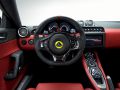
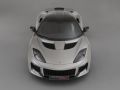
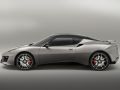
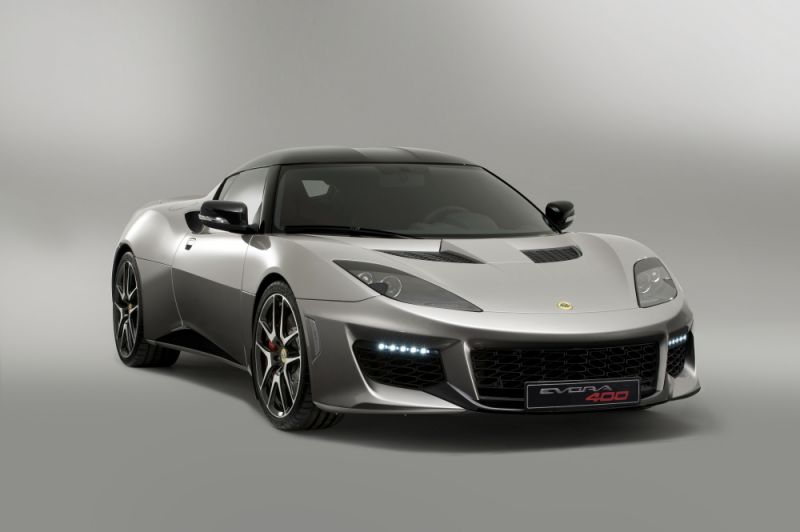
2015 Lotus Evora 400 - Photo 1
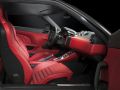
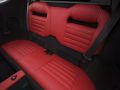
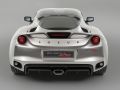
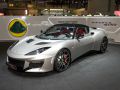
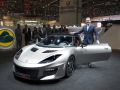
Lotus Evora 400 - Photo 2Lotus Evora 400 - Photo 3Lotus Evora 400 - Photo 4Lotus Evora 400 - Photo 5Lotus Evora 400 - Photo 6Lotus Evora 400 - Photo 7Lotus Evora 400 - Photo 8Lotus Evora 400 - Photo 9Lotus Evora 400 - Photo 10

Key specs

Lotus Evora 400 3.5 V6 (406 Hp) Automatic /Coupe 2015 - 2018/

What is the body type of Lotus Evora 400?
Coupe, 2 Doors, 4 Seats
What is the fuel consumption and economy of Lotus Evora 400 3.5 V6 (406 Hp) Automatic?
9.7 l/100 km
24.2 US mpg
29.1 UK mpg
10.3 km/l
How environmentally friendly is Lotus Evora 3.5 V6 (406 Hp) Automatic?
225 g/km CO2
How fast is 2015 Evora 400 3.5 V6 (406 Hp) Automatic?
280 km/h | 174 mph
0-100 km/h: 4.2 sec
0-60 mph: 4.1 sec
What is the power output of Lotus Evora Coupe 2015 3.5 V6 (406 Hp) Automatic?
406 Hp, 410 Nm
302 lb.-ft.
What is the engine displacement of Lotus Evora Coupe 2015 3.5 V6 (406 Hp) Automatic?
3.5 l
3456 cm3
210.9 cu. in.
What is the number of cylinders in 2015 Lotus 3.5 V6 (406 Hp) Automatic?
6, V-engine
What is the drivetrain of Lotus Evora 400 Coupe 2015 3.5 V6 (406 Hp) Automatic?
Rear wheel drive. Internal Combustion engine. The Internal combustion engine (ICE) drives the rear wheels of the vehicle.
What is the length of 2015 Lotus Evora Coupe?
4394 mm
172.99 in.
What is the width of 2015 Lotus Evora Coupe?
1845 mm
72.64 in.
What is the kerb weight of 2015 Lotus Evora 400 3.5 V6 (406 Hp) Automatic?
1422 kg
3135 lbs.
What are the number of gears and the gearbox type of 2015 Lotus Evora 400 3.5 V6 (406 Hp) Automatic?
6, automatic transmission
General information

Brand
Model
Generation
Modification (Engine)
3.5 V6 (406 Hp) Automatic
Start of production
2015
End of production
August, 2018
Powertrain Architecture
Internal Combustion engine
Body type
Coupe
Seats
4
Doors
2
Looking for Lotus Evora on the used-car market?
Check its history →

Performance specs

Fuel consumption (economy) - urban
14.1 l/100 km 16.7 US mpg
20 UK mpg
7.1 km/l
Fuel consumption (economy) - extra urban
7.1 l/100 km 33.1 US mpg
39.8 UK mpg
14.1 km/l
Fuel consumption (economy) - combined
9.7 l/100 km 24.2 US mpg
29.1 UK mpg
10.3 km/l
CO2 emissions
225 g/km
Fuel Type
Petrol (Gasoline)
Acceleration 0 - 100 km/h
4.2 sec
Acceleration 0 - 62 mph
4.2 sec
Acceleration 0 - 60 mph
4.1 sec
Maximum speed
280 km/h 174 mph
Weight-to-power ratio
3.5 kg/Hp, 285.5 Hp/tonne
Weight-to-torque ratio
3.5 kg/Nm, 288.3 Nm/tonne

Engine specs

Power
406 Hp @ 7000 rpm.
Power per litre
117.5 Hp/l
Torque
410 Nm @ 3500-6500 rpm. 302 lb.-ft. @ 3500-6500 rpm.
Engine layout
Middle, Transverse
Engine Model/Code
2GR-FE
Engine displacement
3456 cm3 210.9 cu. in.
Number of cylinders
6
Engine configuration
V-engine
Cylinder Bore
94 mm 3.7 in.
Piston Stroke
83 mm 3.27 in.
Number of valves per cylinder
4
Fuel injection system
Multi-port manifold injection
Engine aspiration
Supercharger, Intercooler
Engine oil capacity
5.75 l 6.08 US qt | 5.06 UK qt
Engine oil specification
Coolant
12.5 l 13.21 US qt | 11 UK qt

Volume and weights

Kerb Weight
1422 kg 3135 lbs.
Fuel tank capacity
60 l 15.85 US gal | 13.2 UK gal

Dimensions

Length
4394 mm 172.99 in.
Width
1845 mm 72.64 in.
Height
1229 mm 48.39 in.
Wheelbase
2575 mm 101.38 in.
Front track
1564 mm 61.57 in.
Rear (Back) track
1575 mm 62.01 in.
Drag coefficient (Cd)
0.35

Drivetrain, brakes and suspension specs

Drivetrain Architecture
The Internal combustion engine (ICE) drives the rear wheels of the vehicle.
Drive wheel
Rear wheel drive
Number of gears and type of gearbox
6 gears, automatic transmission
Front suspension
Double wishbone
Rear suspension
Double wishbone
Front brakes
Ventilated discs
Rear brakes
Ventilated discs
Assisting systems
ABS (Anti-lock braking system)
Steering type
Steering rack and pinion
Tire size
235/35 R19; 285/30 R20
Wheel rim size
19; 20