Home >> Car catalog >> Ligier >> JS50 >> JS50 I (facelift 2017) Long >> 0.5 Progress (8 Hp) CVT
All brands Blog Login Register Car Specs API
English ▼

Specs of Ligier JS50 I (facelift 2017) Long 0.5 Progress (8 Hp) CVT /2019, 2020, 2021, 2022, 2023, 2024/

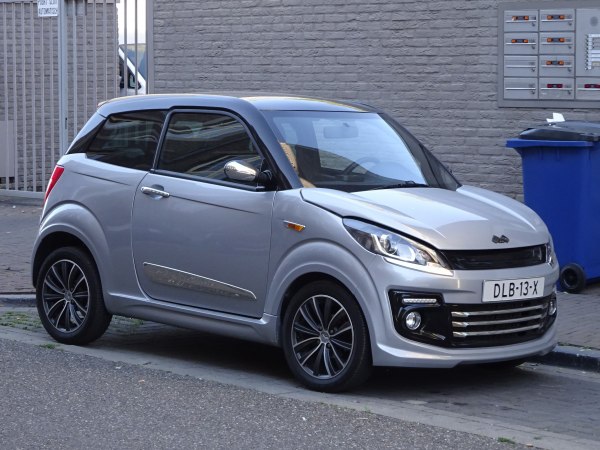
2017 Ligier JS50 I (facelift 2017) Long - Photo 1

Key specs

Ligier JS50 I (facelift 2017) Long 0.5 Progress (8 Hp) CVT /Quadricycle 2019 - 2024/

What is the body type of Ligier JS50 I (facelift 2017) Long?
Quadricycle, 3 Doors, 2 Seats
What is the fuel consumption and economy of Ligier JS50 I (facelift 2017) Long 0.5 Progress (8 Hp) CVT?
3.57 l/100 km
65.9 US mpg
79.1 UK mpg
28 km/l
How environmentally friendly is Ligier JS50 0.5 Progress (8 Hp) CVT?
92.9 g/km CO2
Euro 5
How fast is 2019 JS50 I (facelift 2017) Long 0.5 Progress (8 Hp) CVT?
45 km/h | 28 mph
What is the power output of Ligier JS50 Quadricycle 2019 0.5 Progress (8 Hp) CVT?
8 Hp, 17 Nm
13 lb.-ft.
What is the engine displacement of Ligier JS50 Quadricycle 2019 0.5 Progress (8 Hp) CVT?
0.5 l
505 cm3
30.82 cu. in.
What is the number of cylinders in 2019 Ligier 0.5 Progress (8 Hp) CVT?
2, Inline
What is the drivetrain of Ligier JS50 I (facelift 2017) Long Quadricycle 2019 0.5 Progress (8 Hp) CVT?
Front wheel drive. Internal Combustion engine. The Internal combustion engine (ICE) drives the front wheels of the vehicle.
What is the length of 2019 Ligier JS50 Quadricycle?
3000 mm
118.11 in.
What is the width of 2019 Ligier JS50 Quadricycle?
1500 mm
59.06 in.
What is the kerb weight of 2019 Ligier JS50 I (facelift 2017) Long 0.5 Progress (8 Hp) CVT?
350 kg
772 lbs.
What are the number of gears and the gearbox type of 2019 Ligier JS50 I (facelift 2017) Long 0.5 Progress (8 Hp) CVT?
automatic transmission CVT
General information

Brand
Model
Modification (Engine)
0.5 Progress (8 Hp) CVT
Start of production
2019
End of production
2024
Powertrain Architecture
Internal Combustion engine
Body type
Quadricycle
Seats
2
Doors
3
Looking for Ligier JS50 on the used-car market?
Check its history →

Performance specs

Fuel consumption (economy) - combined
3.57 l/100 km 65.9 US mpg
79.1 UK mpg
28 km/l
CO2 emissions
92.9 g/km
Fuel Type
Diesel
Maximum speed
45 km/h 28 mph
Emission standard
Euro 5
Weight-to-power ratio
43.8 kg/Hp, 22.9 Hp/tonne
Weight-to-torque ratio
20.6 kg/Nm, 48.6 Nm/tonne

Engine specs

Power
8 Hp @ 3000 rpm.
Power per litre
15.8 Hp/l
Torque
17 Nm @ 1700 rpm. 13 lb.-ft. @ 1700 rpm.
Maximum engine speed
3200 rpm.
Engine layout
Front, Transverse
Engine Model/Code
LDW502M3
Engine displacement
505 cm3 30.82 cu. in.
Number of cylinders
2
Engine configuration
Inline
Cylinder Bore
72 mm 2.83 in.
Piston Stroke
62 mm 2.44 in.
Number of valves per cylinder
2
Fuel injection system
Pump-nozzle (Unit Injector)
Engine aspiration
Naturally aspirated engine
Valvetrain
SOHC
Engine oil capacity
1.4 l 1.48 US qt | 1.23 UK qt
Engine oil specification
Coolant
3.2 l 3.38 US qt | 2.82 UK qt

Volume and weights

Kerb Weight
350 kg 772 lbs.
Fuel tank capacity
17.5 l 4.62 US gal | 3.85 UK gal

Dimensions

Length
3000 mm 118.11 in.
Width
1500 mm 59.06 in.
Height
1466 mm 57.72 in.
Minimum turning circle (turning diameter)
9.5 m 31.17 ft.

Drivetrain, brakes and suspension specs

Drivetrain Architecture
The Internal combustion engine (ICE) drives the front wheels of the vehicle.
Drive wheel
Front wheel drive
Number of gears and type of gearbox
automatic transmission CVT
Front suspension
Independent, McPherson type
Rear suspension
Independent coil spring
Front brakes
Disc, 220 mm
Rear brakes
Disc, 180 mm
Steering type
Steering rack and pinion
Tire size
155/60 R15; 165/50 R16
Wheel rim size
15; 16
