Home › Car catalog › Kia › Niro › Niro II (facelift 2026) › 1.6 GDI (139 Hp) Hybrid DCT

KiaKia Niro II (facelift 2026) 1.6 GDI (139 Hp) Hybrid DCT2026: specs, Fuel consumption, Battery, Electric range, Dimensions

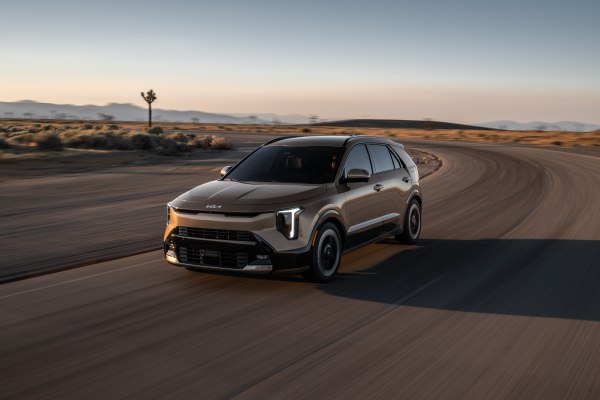
2027 Kia Niro II (facelift 2026) - Photo 1
Kia Niro II (facelift 2026) - Photo 2Kia Niro II (facelift 2026) - Photo 3Kia Niro II (facelift 2026) - Photo 4Kia Niro II (facelift 2026) - Photo 5Kia Niro II (facelift 2026) - Photo 6Kia Niro II (facelift 2026) - Photo 7Kia Niro II (facelift 2026) - Photo 8Kia Niro II (facelift 2026) - Photo 9Kia Niro II (facelift 2026) - Photo 10

Key specs

Kia Niro II (facelift 2026) 1.6 GDI (139 Hp) Hybrid DCT /SUV, CUV 2026 - /
What is the body type of Kia Niro II (facelift 2026)?
SUV, CUV, 5 Doors, 5 Seats
What is the fuel consumption and economy of Kia Niro II (facelift 2026) 1.6 GDI (139 Hp) Hybrid DCT?
5-5.3 l/100 km
47 - 44.4 US mpg
56.5 - 53.3 UK mpg
20 - 18.9 km/l
How environmentally friendly is Kia Niro 1.6 GDI (139 Hp) Hybrid DCT?
76-83 g/km CO2
How fast is 2026 Niro II (facelift 2026) 1.6 GDI (139 Hp) Hybrid DCT?
175 km/h | 109 mph
0-100 km/h: 10.7 sec
0-60 mph: 10.2 sec
What is the power output of Kia Niro SUV, CUV 2026 1.6 GDI (139 Hp) Hybrid DCT?
139 Hp, 265 Nm
195 lb.-ft.
What is the engine displacement of Kia Niro SUV, CUV 2026 1.6 GDI (139 Hp) Hybrid DCT?
1.6 l
1580 cm3
96.42 cu. in.
What is the number of cylinders in 2026 Kia 1.6 GDI (139 Hp) Hybrid DCT?
4, Inline
What is the drivetrain of Kia Niro II (facelift 2026) SUV, CUV 2026 1.6 GDI (139 Hp) Hybrid DCT?
Front wheel drive. FHEV. The Internal combustion engine (ICE) and electric motor drive the front wheels of the car with the ability to work in full electric or mixed mode.
What is the length of 2026 Kia Niro SUV, CUV?
4430 mm
174.41 in.
What is the width of 2026 Kia Niro SUV, CUV?
1825 mm
71.85 in.
What is the kerb weight of 2026 Kia Niro II (facelift 2026) 1.6 GDI (139 Hp) Hybrid DCT?
1450-1525 kg
3197 - 3362 lbs.
What is the maximum permissible mass of 2026 Kia Niro II (facelift 2026) 1.6 GDI (139 Hp) Hybrid DCT?
1930 kg
4255 lbs.
What is the trunk (boot) capacity of 2026 Kia Niro SUV, CUV?
619 - 1740 l
21.9 - 61.4 cu. ft.
What are the number of gears and the gearbox type of 2026 Kia Niro II (facelift 2026) 1.6 GDI (139 Hp) Hybrid DCT?
6, automatic transmission DCT
Kia Niro II (facelift 2026) 1.6 GDI (139 Hp) Hybrid DCT
Compare

General information

Brand
Model
Modification (Engine)
1.6 GDI (139 Hp) Hybrid DCT
Start of production
July, 2026
Powertrain Architecture
FHEV (Full Hybrid Electric Vehicle)
Body type
SUV (Sport Utility Vehicle), CUV (Crossover Utility Vehicle)
Seats
5
Doors
5
Looking for Kia Niro on the used-car market?
Check its history →

Performance specs

Fuel consumption (economy) - urban
4.7-5.2 l/100 km 50 - 45.2 US mpg
60.1 - 54.3 UK mpg
21.3 - 19.2 km/l
Fuel consumption (economy) - extra urban
5.3-5.5 l/100 km 44.4 - 42.8 US mpg
53.3 - 51.4 UK mpg
18.9 - 18.2 km/l
Fuel consumption (economy) - combined
5-5.3 l/100 km 47 - 44.4 US mpg
56.5 - 53.3 UK mpg
20 - 18.9 km/l
CO2 emissions
76-83 g/km
Fuel Type
Petrol (Gasoline)
Acceleration 0 - 100 km/h
10.7 sec
Acceleration 0 - 62 mph
10.7 sec
Acceleration 0 - 60 mph (Calculated by Auto-Data.net)
10.2 sec
Maximum speed
175 km/h 109 mph
100 km/h - 0
41.4 m
Weight-to-power ratio
10.4 kg/Hp, 95.9 Hp/tonne
Weight-to-torque ratio
5.5 kg/Nm, 182.8 Nm/tonne

Electric and hybrid car specs

Gross battery capacity
1.32 kWh
Battery voltage
240 V
Battery technology
Lithium nickel manganese cobalt oxides (Li-NMC)
Battery weight
15 kg 33 lbs.
Battery location
Under the rear seats

Electric motor 1

Electric motor power
44 Hp
Electric motor Torque
170 Nm 125 lb.-ft.
Electric motor location
Between the combustion engine and the transmission
Electric motor type
Synchronous
System power
139 Hp
System torque
265 Nm 195 lb.-ft.

Internal combustion engine specs

Power
105 Hp @ 5700 rpm.
Power per litre
66.5 Hp/l
Torque
144 Nm @ 4000 rpm. 106 lb.-ft. @ 4000 rpm.
Engine layout
Front, Transverse
Engine Model/Code
Smartstream
Engine displacement
1580 cm3 96.42 cu. in.
Number of cylinders
4
Engine configuration
Inline
Cylinder Bore
72 mm 2.83 in.
Piston Stroke
97 mm 3.82 in.
Number of valves per cylinder
4
Fuel injection system
Direct injection
Engine aspiration
Naturally aspirated engine
Valvetrain
DOHC, Dual CVVT
Engine systems
Start & Stop System

Volume and weights

Kerb Weight
1450-1525 kg 3197 - 3362 lbs.
Max. weight
1930 kg 4255 lbs.
Max load
405-480 kg 893 - 1058 lbs.
Trunk (boot) space - minimum
619 l 21.9 cu. ft.
Trunk (boot) space - maximum
1740 l 61.4 cu. ft.
Fuel tank capacity
42 l 11.1 US gal | 9.24 UK gal

Dimensions

Length
4430 mm 174.41 in.
Width
1825 mm 71.85 in.
Height
1545-1550 mm 60.83 - 61.02 in.
Wheelbase
2720 mm 107.09 in.
Front track
1573-1585 mm 61.93 - 62.4 in.
Rear (Back) track
1585-1596 mm 62.4 - 62.83 in.
Front overhang
895 mm 35.24 in.
Rear overhang
815 mm 32.09 in.
Ride height (ground clearance)
160 mm 6.3 in.
Minimum turning circle (turning diameter)
10.6 m 34.78 ft.
Approach angle
14.6°
Departure angle
27.5°

Drivetrain, brakes and suspension specs

Drivetrain Architecture
The Internal combustion engine (ICE) and electric motor drive the front wheels of the car with the ability to work in full electric or mixed mode.
Drive wheel
Front wheel drive
Number of gears and type of gearbox
6 gears, automatic transmission DCT
Front suspension
Independent, McPherson type with coil spring and anti-roll bar
Rear suspension
Independent multi-link spring suspension with anti-roll bar
Front brakes
Ventilated discs
Rear brakes
Disc
Assisting systems
ABS (Anti-lock braking system)
Steering type
Steering rack and pinion
Power steering
Electric Steering
Tire size
205/60 R16; 225/45 R18
Wheel rim size
16; 18