Home >> Autocatalog >> Fiat >> 500L >> 500L Trekking/Cross (facelift 2017) >> 1.3 MultiJetII (95 Hp)
Autocatalog Blog Login Register Car Specs API
English ▼

Specs of Fiat 500L Trekking/Cross (facelift 2017) 1.3 MultiJetII (95 Hp) /2017, 2018/

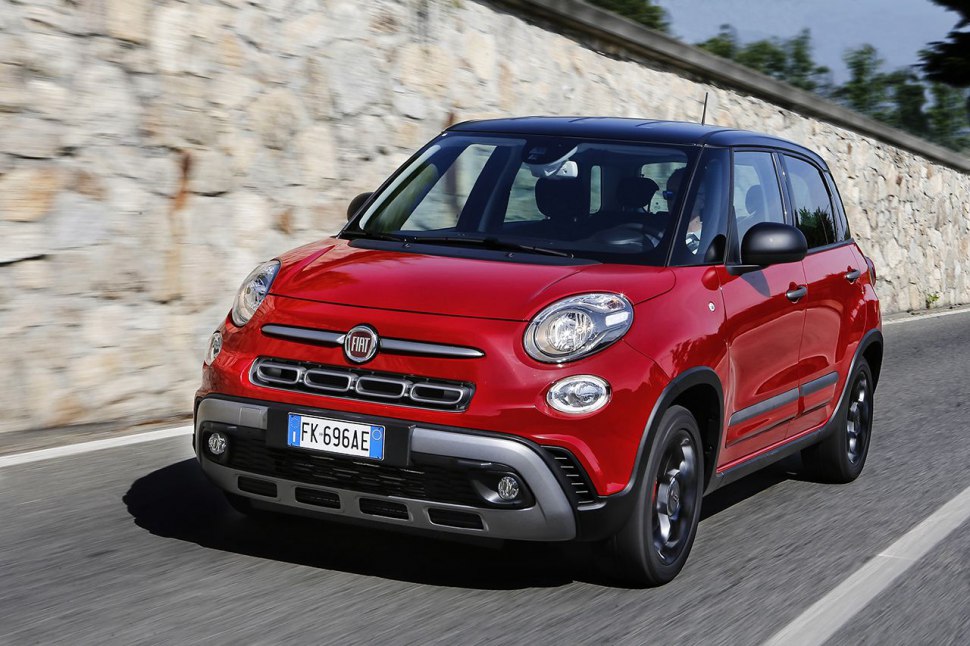
2018 Fiat 500L Trekking/Cross (facelift 2017) - Photo 1

Key specs

Fiat 500L Trekking/Cross (facelift 2017) 1.3 MultiJetII (95 Hp) /Hatchback 2017 - 2018/

What is the body type of Fiat 500L Trekking/Cross (facelift 2017)?
Hatchback, 5 Doors, 5 Seats
What is the fuel consumption and economy of Fiat 500L Trekking/Cross (facelift 2017) 1.3 MultiJetII (95 Hp)?
4.2 l/100 km
56 US mpg
67.3 UK mpg
23.8 km/l
How environmentally friendly is Fiat 500L 1.3 MultiJetII (95 Hp)?
109 g/km CO2
Euro 6
How fast is 2017 500L Trekking/Cross (facelift 2017) 1.3 MultiJetII (95 Hp)?
166 km/h | 103 mph
0-100 km/h: 14.3 sec
0-60 mph: 13.6 sec
What is the power output of Fiat 500L Hatchback 2017 1.3 MultiJetII (95 Hp)?
95 Hp, 200 Nm
148 lb.-ft.
What is the engine displacement of Fiat 500L Hatchback 2017 1.3 MultiJetII (95 Hp)?
1.2 l
1248 cm3
76.16 cu. in.
What is the number of cylinders in 2017 Fiat 1.3 MultiJetII (95 Hp)?
4, Inline
What is the drivetrain of Fiat 500L Trekking/Cross (facelift 2017) Hatchback 2017 1.3 MultiJetII (95 Hp)?
Front wheel drive. Internal Combustion engine. The Internal combustion engine (ICE) drives the front wheels of the vehicle.
What is the length of 2017 Fiat 500L Hatchback?
4276 mm
168.35 in.
What is the width of 2017 Fiat 500L Hatchback?
1800 mm
70.87 in.
What is the number of gears in What is the gearbox type of 2017 Fiat 500L Trekking/Cross (facelift 2017) 1.3 MultiJetII (95 Hp)?
5, manual transmission

General information

Brand
Model
Modification (Engine)
1.3 MultiJetII (95 Hp)
Start of production
2017 year
End of production
2018 year
Powertrain Architecture
Internal Combustion engine
Body type
Hatchback
Seats
5
Doors
5
Looking for Fiat 500L on the used-car market?
Check its history →

Performance specs

Fuel consumption (economy) - urban
5.1 l/100 km 46.1 US mpg
55.4 UK mpg
19.6 km/l
Fuel consumption (economy) - extra urban
3.6 l/100 km 65.3 US mpg
78.5 UK mpg
27.8 km/l
Fuel consumption (economy) - combined
4.2 l/100 km 56 US mpg
67.3 UK mpg
23.8 km/l
CO2 emissions
109 g/km
Fuel Type
Diesel
Acceleration 0 - 100 km/h
14.3 sec
Acceleration 0 - 62 mph
14.3 sec
Acceleration 0 - 60 mph (Calculated by Auto-Data.net)
13.6 sec
Maximum speed
166 km/h 103 mph
Emission standard
Euro 6

Engine specs

Power
95 Hp @ 3750 rpm.
Power per litre
76.1 Hp/l
Torque
200 Nm @ 1500 rpm. 148 lb.-ft. @ 1500 rpm.
Engine layout
Front, Transverse
Engine Model/Code
330A1000
Engine displacement
1248 cm3 76.16 cu. in.
Number of cylinders
4
Engine configuration
Inline
Cylinder Bore
69.6 mm 2.74 in.
Piston Stroke
82 mm 3.23 in.
Compression ratio
16.8:1
Number of valves per cylinder
4
Fuel injection system
Diesel Commonrail
Engine aspiration
Turbocharger, Intercooler
Engine oil capacity
3.9 l 4.12 US qt | 3.43 UK qt
Engine oil specification
Coolant
5.9 l 6.23 US qt | 5.19 UK qt
Engine systems
Particulate filter

Volume and weights

Fuel tank capacity
50 l 13.21 US gal | 11 UK gal

Dimensions

Length
4276 mm 168.35 in.
Width
1800 mm 70.87 in.
Height
1679 mm 66.1 in.

Drivetrain, brakes and suspension specs

Drivetrain Architecture
The Internal combustion engine (ICE) drives the front wheels of the vehicle.
Drive wheel
Front wheel drive
Number of gears and type of gearbox
5 gears, manual transmission
Front suspension
Independent, McPherson type
Rear suspension
Semi-independent, coil spring
Front brakes
Ventilated discs
Rear brakes
Disc
Assisting systems
ABS (Anti-lock braking system)
Steering type
Steering rack and pinion
Power steering
Electric Steering
Tires size
205/55 R16; 225/45 R17
Wheel rims size
6.5J x 16; 7J x 17