Home >> Car catalog >> Aston Martin >> Lagonda >> Lagonda II >> 5.3 (310 Hp)
All brands Blog Login Register Car Specs API
English ▼

Specs of Aston Martin Lagonda II 5.3 (310 Hp) /1976, 1977, 1978, 1979, 1980, 1981, 1982, 1983, 1984, 1985, 1986, 1987, 1988, 1989/

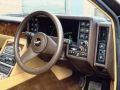
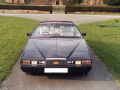
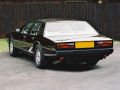
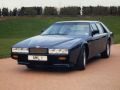
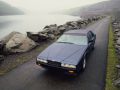
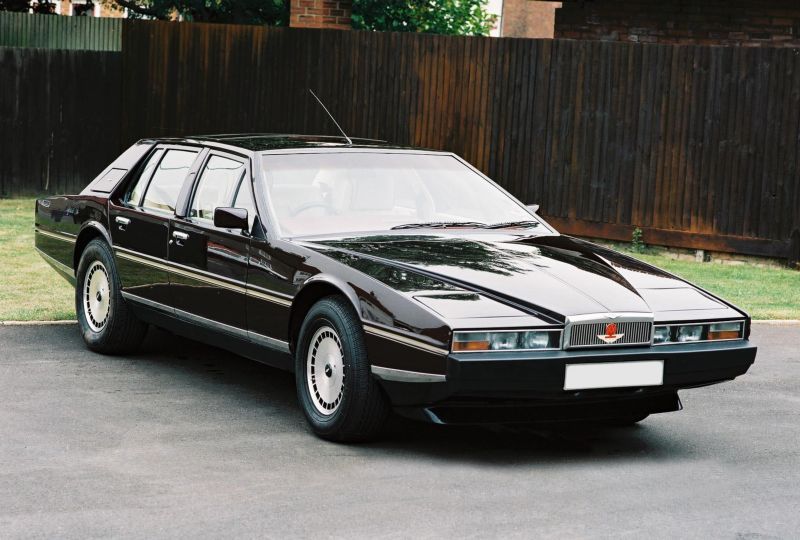
1976 Aston Martin Lagonda II - Photo 1
Aston Martin Lagonda II - Photo 2Aston Martin Lagonda II - Photo 3Aston Martin Lagonda II - Photo 4Aston Martin Lagonda II - Photo 5Aston Martin Lagonda II - Photo 6Aston Martin Lagonda II - Photo 7Aston Martin Lagonda II - Photo 8Aston Martin Lagonda II - Photo 9Aston Martin Lagonda II - Photo 10

Key specs

Aston Martin Lagonda II 5.3 (310 Hp) /Sedan 1976 - 1989/

What is the body type of Aston Martin Lagonda II?
Sedan, 4 Doors, 5 Seats
How fast is 1976 Lagonda II 5.3 (310 Hp)?
230 km/h | 143 mph
0-100 km/h: 8.8 sec
0-60 mph: 8.8 sec
What is the power output of Aston Martin Lagonda Sedan 1976 5.3 (310 Hp)?
310 Hp, 434 Nm
320 lb.-ft.
What is the engine displacement of Aston Martin Lagonda Sedan 1976 5.3 (310 Hp)?
5.3 l
5340 cm3
325.87 cu. in.
What is the number of cylinders in 1976 Aston Martin 5.3 (310 Hp)?
8, V-engine
What is the drivetrain of Aston Martin Lagonda II Sedan 1976 5.3 (310 Hp)?
Rear wheel drive. Internal Combustion engine. The Internal combustion engine (ICE) drives the rear wheels of the vehicle.
What is the length of 1976 Aston Martin Lagonda Sedan?
5285 mm
208.07 in.
What is the width of 1976 Aston Martin Lagonda Sedan?
1790 mm
70.47 in.
What is the kerb weight of 1976 Aston Martin Lagonda II 5.3 (310 Hp)?
2095 kg
4619 lbs.
What is the trunk (boot) capacity of 1976 Aston Martin Lagonda Sedan?
370 l
13.1 cu. ft.
General information

Model
Generation
Modification (Engine)
5.3 (310 Hp)
Start of production
1976
End of production
1989
Powertrain Architecture
Internal Combustion engine
Body type
Sedan
Seats
5
Doors
4
Looking for Aston Martin Lagonda on the used-car market?
Check its history →

Performance specs

Fuel consumption (economy) - urban
25 l/100 km 9.4 US mpg
11.3 UK mpg
4 km/l
Fuel consumption (economy) - extra urban
18 l/100 km 13.1 US mpg
15.7 UK mpg
5.6 km/l
Fuel Type
Petrol (Gasoline)
Acceleration 0 - 100 km/h
8.8 sec
Acceleration 0 - 62 mph
8.8 sec
Acceleration 0 - 60 mph
8.8 sec
Maximum speed
230 km/h 143 mph
Weight-to-power ratio
6.8 kg/Hp, 148 Hp/tonne
Weight-to-torque ratio
4.8 kg/Nm, 207.2 Nm/tonne

Engine specs

Power
310 Hp @ 5000 rpm.
Power per litre
58.1 Hp/l
Torque
434 Nm @ 4000 rpm. 320 lb.-ft. @ 4000 rpm.
Engine layout
Front, Longitudinal
Engine displacement
5340 cm3 325.87 cu. in.
Number of cylinders
8
Engine configuration
V-engine
Cylinder Bore
100 mm 3.94 in.
Compression ratio
9.3:1
Number of valves per cylinder
2
Engine aspiration
Naturally aspirated engine
Engine oil capacity
11.3 l 11.94 US qt | 9.94 UK qt
Coolant
18.1 l 19.13 US qt | 15.93 UK qt

Volume and weights

Kerb Weight
2095 kg 4619 lbs.
Trunk (boot) space - minimum
370 l 13.1 cu. ft.
Fuel tank capacity
128 l 33.81 US gal | 28.16 UK gal

Dimensions

Length
5285 mm 208.07 in.
Width
1790 mm 70.47 in.
Height
1300 mm 51.18 in.
Minimum turning circle (turning diameter)
11.6 m 38.06 ft.

Drivetrain, brakes and suspension specs

Drivetrain Architecture
The Internal combustion engine (ICE) drives the rear wheels of the vehicle.
Drive wheel
Rear wheel drive
Tire size
255/60 VR16