CompareToyota Land Cruiser (J250) 2.4 i-FORCE MAX (326 Hp) Full Hybrid 4WD ECT-i
Toyota Land Cruiser (J250) 2.4 i-FORCE MAX (326 Hp) Full Hybrid 4WD ECT-i
General information
Brand
Toyota
Model
Land Cruiser
Generation
Land Cruiser (J250)
Modification (Engine)
2.4 i-FORCE MAX (326 Hp) Full Hybrid 4WD ECT-i
Start of production
2024
Powertrain Architecture
FHEV (Full Hybrid Electric Vehicle)
Body type
SUV (Sport Utility Vehicle)
Seats
5
Doors
5
Performance specs
Fuel consumption (economy) - urban
10.7 l/100 km (EPA)
Fuel consumption (economy) - extra urban
9.4 l/100 km (EPA)
Fuel consumption (economy) - combined
10.2 l/100 km (EPA)
Fuel Type
Petrol (Gasoline)
Emission standard
BIN 125
Weight-to-power ratio
7 kg/Hp, 142.7 Hp/tonne
Weight-to-torque ratio
3.6 kg/Nm, 275.7 Nm/tonne
Electric and hybrid car specs
Gross battery capacity
1.87 kWh
Battery voltage
288 V
Battery technology
Nickel-metal hydride (NiMH)
Electric motor 1
Electric motor power
48 Hp
Engine layout
Integrated into the transmission
System power
326 Hp/6000 rpm.
System torque
630 Nm/1700 rpm.
Internal combustion engine specs
Engine layout
Front, Longitudinal
Number of cylinders
4
Engine configuration
Inline
Number of valves per cylinder
4
Fuel injection system
Direct injection and Multi-port manifold injection
Engine aspiration
Turbocharger, Intercooler
Valvetrain
DVVT, VVT-i
Engine systems
Start & Stop System
Volume and weights
Kerb Weight
2285 kg
Max. weight
3100 kg
Max load
815 kg
Trunk (boot) space - minimum
1062 l
Fuel tank capacity
68 l
Permitted trailer load with brakes (12%)
2722 kg
Dimensions
Length
4923 mm
Width
1979 mm
Width including mirrors
2139 mm
Height
1933 mm
Wheelbase
2850 mm
Ride height (ground clearance)
203 mm
Minimum turning circle (turning diameter)
12.2 m
Approach angle
31°
Departure angle
17°
Drivetrain, brakes and suspension specs
Drivetrain Architecture
The Internal combustion engine (ICE) and the electric motor permanently drive the four wheels of the car with the ability to work in full electric or mixed mode.
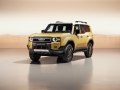 Toyota Land Cruiser (J250) 2.4 i-FORCE MAX (326 Hp) Full Hybrid 4WD ECT-i
 Български
 English
 Русский
 Deutsch
 Italiano
 Français
 Español
 Ελληνικά
 Türkçe
 Română
 Suomi
Suomi Svenska
 Norsk
Norsk Polski
 Português
 Nederlands
 Čeština
 Magyar
 YouTube
 Telegram
 Viber
Viber Facebook
 Instagram
 TikTok
 Pinterest