Startseite › Autokatalog › Toyota › Land Cruiser FJ › Land Cruiser FJ › 2.7 (166 PS) 4WD Automatic

ToyotaToyota Land Cruiser FJ 2.7 (166 PS) 4WD Automatic2026: Spezifikationen, Verbrauch, Maße

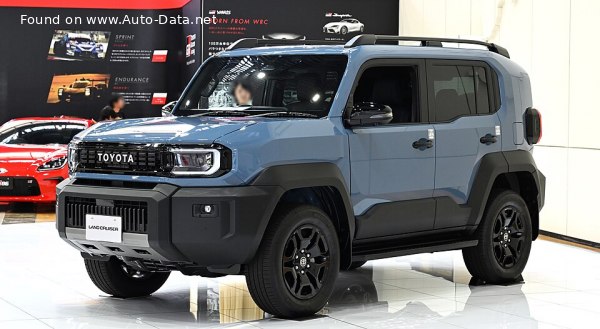
2026 Toyota Land Cruiser FJ - Bild 1
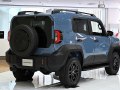
Toyota Land Cruiser FJ - Bild 2Toyota Land Cruiser FJ - Bild 3

Hauptspezifikationen

Toyota Land Cruiser FJ 2.7 (166 PS) 4WD Automatic /SUV 2026 - /
Was ist der Karosserietyp von Toyota Land Cruiser FJ?
SUV, 5 Türen, 5 Sitze
Wie hoch ist der Kraftstoffverbrauch von Toyota Land Cruiser FJ 2.7 (166 Hp) 4WD Automatic?
11.3 l/100 km
20.8 US mpg
25 UK mpg
8.8 km/l
Wie hoch ist die Motorleistung von Toyota Land Cruiser FJ SUV 2026 2.7 (166 Hp) 4WD Automatic?
166 PS, 245 Nm
181 lb.-ft.
Wie groß ist der Hubraum von Toyota Land Cruiser FJ SUV 2026 2.7 (166 Hp) 4WD Automatic?
2.7 l
2694 cm3
164.4 cu. in.
Wie viele Zylinder hat der Motor von 2026 Toyota 2.7 (166 Hp) 4WD Automatic?
4, Reihenmotor
Was ist die Antriebsart von Toyota Land Cruiser FJ SUV 2026 2.7 (166 Hp) 4WD Automatic?
Allradantrieb (4x4). Verbrenner. Die VKM treibt die Hinterräder permanent an und die Vorderräder werden bei Bedarf über eine elektrisch oder mechanisch betätigte Kupplung angetrieben.
Wie lang ist 2026 Toyota Land Cruiser FJ SUV?
4610 mm
181.5 in.
Wie breit ist 2026 Toyota Land Cruiser FJ SUV?
1855 mm
73.03 in.
Wie hoch ist das Leergewicht von 2026 Toyota Land Cruiser FJ 2.7 (166 Hp) 4WD Automatic?
2005 kg
4420 lbs.
Wie hoch ist die maximal zulässige Gesamtmasse von 2026 Toyota Land Cruiser FJ 2.7 (166 Hp) 4WD Automatic?
2500 kg
5512 lbs.
Wie viele Gänge und welchen Getriebetyp hat 2026 Toyota Land Cruiser FJ 2.7 (166 Hp) 4WD Automatic?
6, Automatikgetriebe
Toyota Land Cruiser FJ 2.7 (166 PS) 4WD Automatic
Vergleichen

Allgemeine Informationen

Marke
Generation
Modifikation (Motor)
2.7 (166 PS) 4WD Automatic
Produktionsbeginn
Februar, 2026
Antriebsstrangarchitektur
Verbrennungskraftmaschine
Karosserie
SUV (Sportliches Mehrzweckfahrzeug)
Sitze
5
Türen
5
Interessiert an Toyota Land Cruiser FJ als Gebrauchtwagen?
Fahrzeughistorie prüfen →

Leistung

Verbrauch - Innerorts
14.4 l/100 km 16.3 US mpg
19.6 UK mpg
6.9 km/l
Verbrauch - Außerorts
9.5 l/100 km 24.8 US mpg
29.7 UK mpg
10.5 km/l
Verbrauch - Kombiniert
11.3 l/100 km 20.8 US mpg
25 UK mpg
8.8 km/l
Kraftstoffart
Benzin
Masse-Leistungs-Verhältnis (Leistungsgewicht)
12.1 kg/PS, 82.8 PS/t
Masse-Drehmoment-Verhältnis
8.2 kg/Nm, 122.2 Nm/t

Motor

Max. Motorleistung
166 PS @ 5200 U/min
Leistung pro Liter Hubvolumen
61.6 PS/l
Max. Drehmoment
245 Nm @ 4000 U/min 181 lb.-ft. @ 4000 U/min
Motorlayout
Front, Längsrichtung
Motormodell/Motorcode
2TR-FE
Hubraum
2694 cm3 164.4 cu. in.
Anzahl der Zylinder
4
Motorkonfiguration
Reihenmotor
Anzahl der Ventile pro Zylinder
4
Kraftstoffeinspritzsystem
Mehrpunkt-Saugrohreinspritzung
Motoraufladung
Saugmotor
Motorsysteme
Start/Stopp-System

Volumen und Gewichte

Leergewicht
2005 kg 4420 lbs.
Zul. Gesamtgewicht
2500 kg 5512 lbs.
Höchstzulässige Nutzlast
495 kg 1091 lbs.

Maße

Länge
4610 mm 181.5 in.
Breite
1855 mm 73.03 in.
Höhe
1950 mm 76.77 in.
Radstand
2580 mm 101.57 in.
Bodenfreiheit
245 mm 9.65 in.
Kleinster Wendekreisdurchmesser
11 m 36.09 ft.
Vorderer Böschungswinkel
29°
Hinterer Böschungswinkel
38°

Antrieb, Bremsen und Federung

Antriebskonzept
Die VKM treibt die Hinterräder permanent an und die Vorderräder werden bei Bedarf über eine elektrisch oder mechanisch betätigte Kupplung angetrieben.
Antriebsart
Allradantrieb (4x4)
Anzahl der Gänge und Art des Getriebes
6 Gänge, Automatikgetriebe
Vorderradaufhängung
Doppelquerlenker
Hinterradaufhängung
Starrachse
Bremsen vorne
Belüftete Scheibenbremse
Bremsen hinten
Belüftete Scheibenbremse
Assistenzsysteme
ABS (Antiblockiersystem)
Lenkungstyp
Zahnstangenlenkung
Servolenkung
Elektrische Servolenkung
Reifengröße
Felgengröße
18